Flooded Basement Cleanup in Portland, OR
Water on the basement floor or puddles in the crawl space. Find out where it came in before it soaks into the framing.
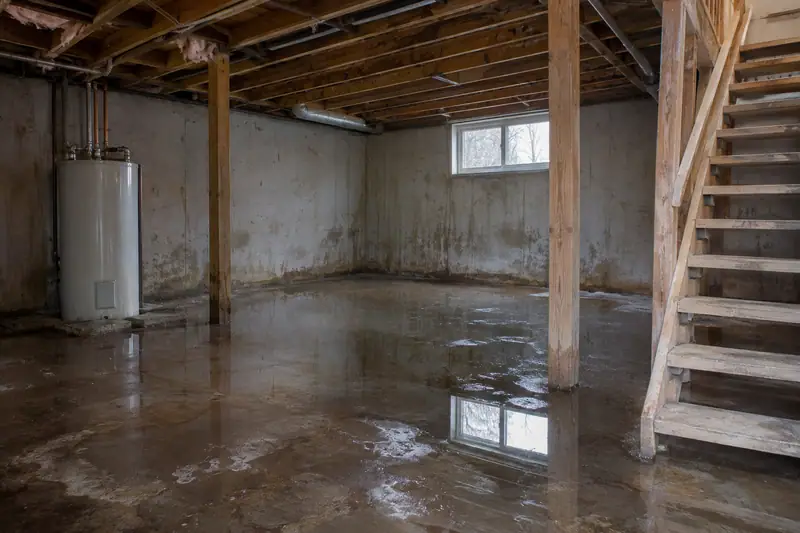
Where the water in a flooded basement comes from
A flooded basement in Portland usually has one of three sources, and the cleanup depends on which one it is. Water from a burst pipe or a failed water heater is clean at first. Water that seeped through the foundation or came in around a window well during a storm carries soil and whatever was on the ground. Water that rose from a floor drain may be sewage.
| What you see | Likely source | What it means |
|---|---|---|
| Water spreading from one corner near the water heater or a pipe | A plumbing leak | Usually clean water if caught early. |
| Water along the base of the walls after heavy rain | Ground water seeping in | Treated as contaminated. |
| Water rising from the floor drain, with a smell | A sewer or drain backup | Black water, handle with care. |
| A wet floor under a window well | Rain collecting in the well | Contaminated, and a drainage fix is needed. |
If water came up through a floor drain, stop using sinks, toilets and the washer until it is checked. Every drop you send down the drain can come back up in the basement. The sewage backup cleanup page covers that case in detail.
What flooded basement cleanup covers
Basements and crawl spaces hold water longer than any other part of the house. Concrete soaks it up, cool air slows evaporation and there is rarely a breeze. A flooded basement in Portland can stay damp for weeks without help, which is why a careful cleanup matters here more than anywhere.
- Pumping out standing water and extracting what the pumps leave behind.
- Removing wet carpet, pad, insulation and the bottom of finished walls when needed.
- Cleaning and treating surfaces touched by ground water or sewage.
- Drying the slab, the framing and any finished walls with dehumidifiers sized for the space.
- Checking the crawl space vapor barrier, insulation and framing for water and damage.
- Taking readings until the materials match the dry parts of the house.
Crawl spaces need their own attention
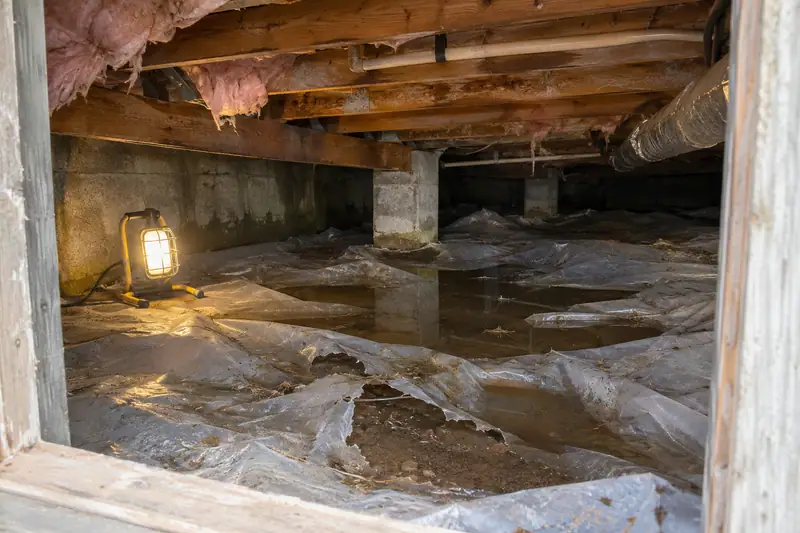
Portland has long rainy seasons that keep crawl spaces damp for months. When water pools on the vapor barrier or soaks the soil underneath, the joists and the subfloor above take on moisture, and the house above starts to smell musty.
Crawl space cleanup usually means pumping out puddles, pulling out torn or soaked plastic, removing wet insulation that has fallen from between the joists, and drying the framing with dehumidifiers. A fresh vapor barrier goes down once the space reads dry. It is also the moment to look at why the water got there, whether that is a gutter emptying next to the foundation, a leaking supply line or ground water.
Finished basements need more care
A finished basement hides water behind carpet, drywall and framed walls that sit right on the slab. The bottom plate of each wall soaks up water, and the drywall above it wicks it higher every hour. Most finished basements need the baseboards removed and the bottom of the drywall checked or cut so the wall cavity can dry. Carpet over a concrete slab dries slowly, and the pad almost always has to go. A basement bedroom or office is worth particular care, because people spend long hours there and a damp wall left behind affects the air in the room.
Urgent or can it wait
Treat a flooded basement in Portland as urgent if the water is deeper than a puddle, if it is near the electrical panel, the furnace or the water heater, if it came from a drain or from outside, or if a finished basement with carpet and drywall got wet. A small clean puddle on bare concrete from a known leak that you have already stopped can wait a few hours, though the slab still needs to dry.
Never walk into standing water in a basement if the power is still on and water is near outlets, cords or the panel. Turn the power off at the panel only if you can reach it from a dry spot. Otherwise wait for help.
What the visit includes
Safety and source
Power is checked, the source is found and stopped, and the water category is decided.
Water out
Pumps and extractors clear the floor and the crawl space.
Remove and clean
Wet finishes, carpet and insulation come out where needed and surfaces are cleaned.
Dry and verify
Dehumidifiers and air movers run until the slab and framing read dry.
You get a clear account of what the readings show and what the choices are, then you decide.
Questions worth asking
- Is this clean water, ground water or sewage?
- Did the water reach the framing or the bottom of the drywall?
- Does the crawl space vapor barrier need to be replaced?
- What caused the water to come in, and what would stop it next time?
While you wait, the before help arrives checklist covers safe steps for basements and crawl spaces.
Keeping the basement dry
- Keep gutters clear and extend downspouts well away from the foundation.
- Make sure the soil slopes away from the house.
- Cover window wells and keep their drains clear.
- Test the sump pump, if you have one, before the rainy season.
- Store belongings on shelves rather than on the basement floor.
- Look in the crawl space after heavy rain once or twice a year.
Flooded basement questions
Can I pump out a flooded basement myself?
A small clean water puddle, yes, with a wet vacuum. Deeper water, water from a drain and water near electrical equipment should be left to someone with the right pumps and protective gear.
Why does my basement smell musty after it dried?
The smell usually means moisture is still in the walls, the framing or the carpet, or that mold has started. Readings show where the moisture is hiding.
Does carpet in a flooded basement have to go?
If the water came from outside or from a drain, yes. If it was clean water caught quickly, the carpet can sometimes be dried, while the pad is usually replaced.
How long does a flooded basement in Portland take to dry?
Concrete dries slowly. Expect several days of drying, and longer for finished basements with walls and flooring.
What about water in the crawl space only?
It still matters, because the moisture rises into the framing and the floor above. Puddles should be removed, wet insulation pulled out and the space dried.
Will this happen again next winter?
It can if the cause is not fixed. Gutters, grading and window wells are the usual culprits for water that comes in from outside.
Serving Portland
We take calls about a flooded basement in Portland, and about wet crawl spaces, from homes across the city. Tell us where the water is and how it got in, and a local technician can come out.