How to Tell if Water Got Into Your Walls
A wall can look normal and still be wet inside. These signs and checks show where the water went.
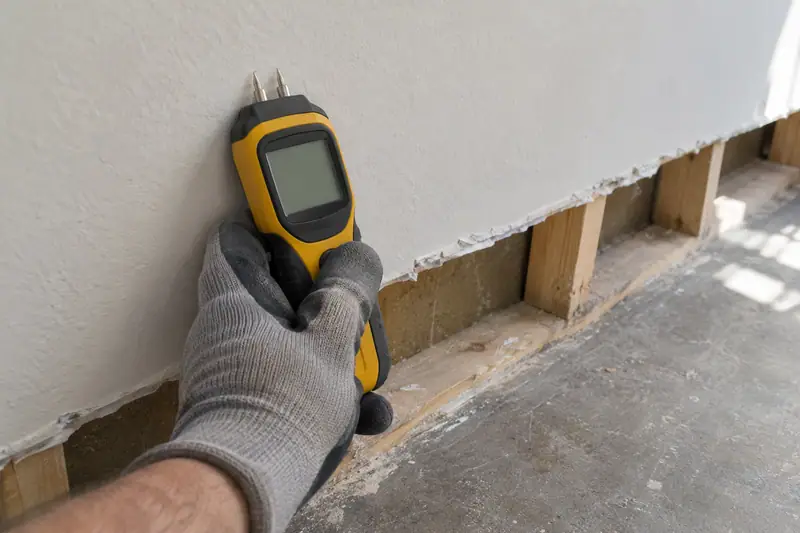
Why water hides inside walls
Drywall acts like a wick. When water sits on the floor beside it, the gypsum and the paper face draw it upward, often well above the line where the puddle was. The insulation and the wooden bottom plate behind the drywall soak it up too. The painted surface you see is the last thing to show a problem, and it can look perfectly dry while the back of the board is wet.
Water also travels inside walls from above. A leak in a bathroom, a supply line in the ceiling or a roof leak during rain can run down the inside of a wall cavity and pool on the bottom plate without leaving a stain anywhere near the source.
Signs to look for
- A tide line, a faint brown or yellow line along the bottom of the wall, a few inches up.
- Paint that bubbles or blisters, or wallpaper that lifts at the seams.
- Baseboards that swell, separate from the wall or show dark staining.
- Soft drywall that gives slightly when you press it near the floor.
- A musty smell that is strongest near one wall or inside a closet on that wall.
- Warped trim around doors, or doors that suddenly stick.
- Outlets or switch plates with rust marks or a damp feel around them.
- Peeling caulk where the wall meets a tub or a shower.
One sign on its own may be old damage. Two or three together near a recent leak almost always mean the wall took on water.
Simple checks you can do yourself
Look low
Water starts at the bottom. Kneel down and look along the base of the wall with a flashlight held flat against it. Bubbles, ridges and stains show up in the raking light.
Press gently
Push with your thumb at a few spots near the floor. Sound drywall feels firm. Wet drywall feels soft or slightly spongy.
Compare the feel
Touch the wall near the leak and then a wall in a dry room. A wet wall often feels cooler because water is evaporating from it.
Pull a baseboard corner
If you are comfortable doing it, gently lift the end of a baseboard. Dark, damp drywall or wet wood behind it tells you the water got in.
Check the other side
Walls have two faces. Look at the room, closet or cabinet on the other side of the wall too.
These checks tell you whether to worry. They cannot tell you how far the water went or when the wall is dry again.
Why a moisture meter is the real answer
A moisture meter gives a number. Taking readings in a row from the floor upward and then along the wall shows where the wet area begins and ends. Comparing those numbers with the same wall in a dry room shows how wet it is. A thermal camera can help spot cooler, damp areas across a large surface, which the meter then confirms.
That map is what a drying plan is built on. Without it, people tend to dry the obvious spot and miss the wet section two feet along, which is where the smell and the mold appear later.
What happens to wet walls
| Situation | Usual approach |
|---|---|
| Clean water, caught early, drywall still firm | Dried in place, often through small holes behind the baseboard. |
| Insulation inside the wall is soaked | A strip of drywall is removed so the insulation can come out and the cavity can dry. |
| Drywall is soft, crumbling or swollen | The damaged section is cut out and replaced after drying. |
| Water was from sewage or outside | Drywall and insulation touched by the water are removed, the cavity is cleaned and dried. |
| Plaster walls in an older home | Usually dried in place with patience, as plaster holds up better but dries slowly. |
Our page on water extraction and drying explains the drying equipment, and mold prevention after water damage explains why walls should never be closed or painted while still damp.
Walls behind showers, tubs and sinks
Slow leaks behind fixtures are among the most common hidden water problems. A worn shower valve, a cracked grout line or a dripping supply under the sink can wet the wall a little every day for months. Look for loose tiles, grout that stays dark long after a shower, a soft spot in the wall on the other side of the shower and staining inside the vanity. A short test helps. Run the shower for ten minutes with the door closed, then check the wall behind it and the ceiling below for fresh damp.
When to call for a closer look
- You found two or more of the signs above near a recent leak.
- The wall was next to standing water for more than a few hours.
- You notice a musty smell near the wall and cannot find a source.
- The leak came from above and you are not sure where it ran.
- You are about to repaint, replace trim or put furniture back.
If you are unsure, it is better to measure and find the wall is dry than to close it up wet. In damp Portland months, walls rarely dry fully on their own.
Questions about water in walls
How high can water travel up drywall?
Water can wick well above the level of the puddle, often several inches and sometimes more if it sat for a long time. That is why readings are taken up the wall, not only at the floor.
Can I use a basic moisture meter myself?
A basic meter can show whether a spot is wetter than another. Reading the numbers well takes practice, and comparing with a dry wall of the same material is essential.
Will a wet wall dry on its own?
Sometimes, slowly, if the wall is open to dry air on one side. Insulated walls and walls with vinyl wallpaper or tile trap water and rarely dry well without help.
Does a water stain mean the wall is still wet?
Not always. A stain can stay after the wall has dried. A meter reading is the only way to tell an old stain from an active one.
Why does the wall smell but look fine?
A musty smell often comes from damp insulation or the back of the drywall, which you cannot see from the room side.
Should I cut a hole to check?
Pulling a baseboard is a gentler first check. Cutting into a wall is best left until readings show where the water is.