Water Removal and Drying in Portland, OR
Soaked carpet, wet hardwood or water under the floor. The water comes out first, then the structure is dried and measured.
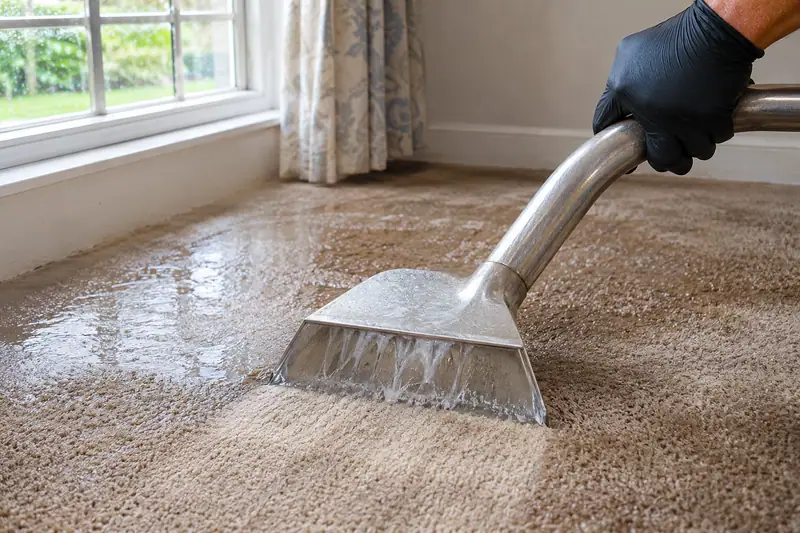
Water removal in Portland, done in the right order
Water removal in Portland is two jobs in one. First the liquid water comes out, with pumps for standing water and extraction tools for carpet and pad. Then the structure is dried, which takes days of controlled airflow and dehumidification while the readings come down. Most of the damage that shows up weeks later comes from skipping or rushing the second job.
When you call Water Damage Portland OR about standing water or soaked floors, we ask where the water came from, whether it has stopped and how long it has been sitting. Those three answers tell a local technician what equipment to bring and whether the water can be treated as clean.
What this service covers
Extraction and drying is the core of almost every water damage job. Water removal in Portland homes covers the work from the moment the source is stopped to the moment the materials read dry again.
- Pumping out standing water from floors, basements and crawl spaces.
- Extracting carpet and pad with weighted or truck mounted tools that pull water out of the fibers and the backing.
- Moisture mapping with meters and thermal imaging to find water inside walls, under floors and in ceilings.
- Removing wet materials that cannot dry in place, such as swollen particleboard, soaked pad and wet insulation.
- Setting drying equipment, meaning air movers to move air across wet surfaces and dehumidifiers to pull the moisture out of the room.
- Daily monitoring of readings, with equipment moved or added as areas dry at different speeds.
- A final dry check before any repairs or new flooring go in.
Signs you need more than a mop and a fan
A small clean spill on tile or vinyl is easy to handle yourself. These signs mean the water has gone somewhere a towel cannot reach.
- The carpet squelches when you step on it, or water rises around your foot.
- Water ran under a wall, a cabinet or a door into the next room.
- The bottom of the drywall feels soft or shows a tide line.
- Hardwood boards are cupping, with edges higher than the middle.
- The water came through a ceiling, so the space above is wet too.
- A musty smell appears a day or two after the floor looked dry.
If two or more of these sound familiar, the water is in the structure. Drying the surface will make it look better for a while, and the moisture underneath will keep working on the wood and the drywall.
Where the water usually comes from
The source shapes the job, so it is worth knowing which one you are dealing with.
| Source | What it usually soaks | Category of water |
|---|---|---|
| A burst or leaking supply pipe | Walls, floors and the ceiling below | Clean, if caught early |
| A water heater that failed | Garage, basement or closet floors and the walls beside them | Clean |
| A washing machine or dishwasher | Kitchen and laundry floors, cabinets, the subfloor | Gray |
| An overflowing toilet | Bathroom floor and the ceiling below | Gray or black, depending on the bowl |
| Rain through a roof, window or wall | Attic insulation, ceilings, wall cavities | Clean at first, worse as it sits |
| Ground water or a sewer backup | Basements, crawl spaces, lower floors | Black |
For burst pipes and appliance leaks, see the pages on burst pipe cleanup and appliance leak cleanup. Sewage and outside water need the extra steps described on sewage backup cleanup.
Call now or wait until morning
Some Portland water removal jobs are emergencies and some can wait a few hours. A simple rule helps.
Treat it as urgent when
- Water is still coming in and you cannot stop it.
- Water is near outlets, the electrical panel or appliances that are plugged in.
- The water is from a sewer line, a toilet or outside flooding.
- A ceiling is sagging or bulging with water.
- Carpet, walls or a finished basement have been wet for more than a few hours.
It can usually wait a few hours when
- The source is off and the water was clean.
- The spill is small and on a hard floor that you have already wiped dry.
- No walls, cabinets or carpet took on water.
When in doubt, treat it as urgent. Drying that starts early is quicker and keeps more of the house in place.
What a water removal visit in Portland includes
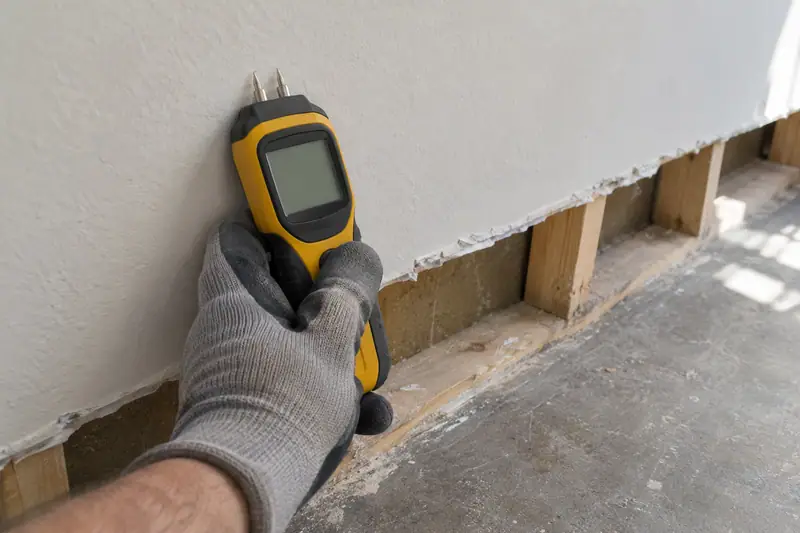
A good visit starts with questions and a walk through. The technician looks at the source, checks that it has stopped and asks when the water started. Then the meters come out.
Readings are taken across the floor and up the walls until the edge of the wet area is found. Those spots are marked, often with tape, and photographed. This map is what the drying plan is built on.
Make it safe
Power to wet areas is turned off, trip hazards are cleared and furniture is moved or set on blocks to protect the legs.
Pull the water out
Pumps clear standing water. Extraction tools go over carpet several times, and hard floors are squeegeed and extracted.
Open what needs to breathe
Baseboards may come off, small holes may be drilled behind them, or wet drywall may be cut low so the cavity can dry.
Set the drying system
Air movers go where the water went and dehumidifiers are sized for the room. Doors and vents may be closed to keep the drying zone contained.
Check and adjust
Readings are repeated on each visit. Equipment comes out of rooms that are dry and stays where readings are still high.
You hear the plan and the reasons for it first, and the work only starts once you agree. You should also hear which materials they expect to save and which they expect to remove.
How structural drying actually works
Drying is about moving water from the materials into the air and then out of the air. Air movers push dry air across wet surfaces so water evaporates faster. Dehumidifiers pull that water back out of the air so it does not settle somewhere else. Heat speeds the process up, and in a closed room the three together dry a house far faster than open windows ever could.
Water removal in Portland during the winter months works best with the house closed up, because the outside air is cool and damp and open windows usually slow drying down. A closed, controlled drying zone with dehumidifiers running is the better approach most of the year.
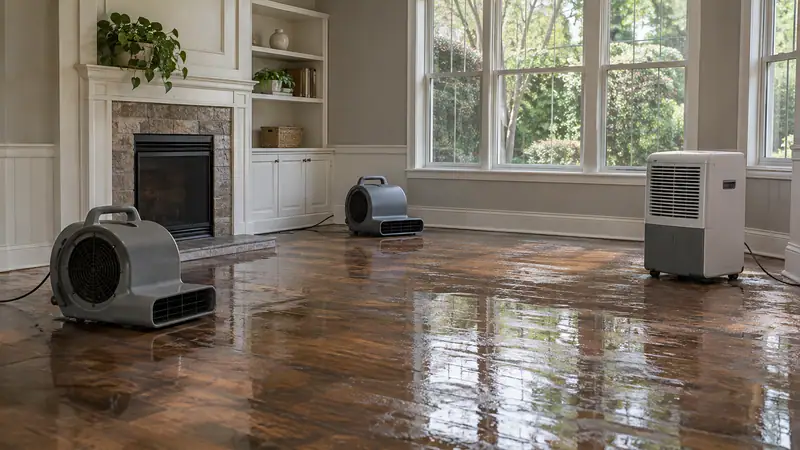
Hardwood and subfloors dry slowly because the water sits inside the wood. Drying mats that pull air through the boards are sometimes used to save a hardwood floor. Drywall dries faster once air can reach the back of it, which is why small holes behind the baseboard are common. Insulation that is soaked usually comes out, because it holds water for a very long time.
You will know drying is working when the readings fall a little each visit. Once they match the readings in a dry part of the house, the equipment can come out and repairs can begin.
Carpet, hardwood, laminate and tile each dry differently
| Floor | What water does to it | Usual approach |
|---|---|---|
| Carpet and pad | Pad soaks up water like a sponge and holds it against the subfloor. | Extract the carpet, usually replace the pad, dry the subfloor. |
| Hardwood | Boards swell and cup as water moves into the wood from below. | Extract, then dry slowly with mats or a sealed drying zone. |
| Laminate and click flooring | The core swells and water hides under the planks. | Usually lifted so the subfloor can dry. |
| Tile and stone | The surface shrugs it off, yet water can sit under the tile and in the grout. | Extract, dry the room, check the subfloor and the wall base. |
The type of floor also shapes how soon the room is usable again. Tile rooms often dry fastest because little water got into the surface itself. Hardwood takes the longest, and rushing it with heat alone can crack the boards, so the readings guide the pace rather than the calendar.
Questions worth asking
- What readings did you find, and where does the wet area stop?
- Which materials are you drying in place, and which are coming out?
- How many days do you expect drying to take, and how will we know it is done?
- Can I see the readings each visit and get a copy at the end?
- Is there anything I should avoid touching or turning off while the equipment runs?
If the water is still active while you read this, the steps on before help arrives come first. They cover the shutoff, the power and what to move out of the way.
Keeping it from happening again
Most indoor water damage starts at a small part that wore out. A few checks a year catch many of them.
- Learn where your main water shutoff is and make sure it turns.
- Replace rubber washing machine hoses with braided ones and check them each year.
- Look under sinks and around the water heater for drips, rust and stains.
- Keep gutters and downspouts clear so rain moves away from the foundation.
- Insulate pipes in crawl spaces and exterior walls before the first freeze.
- Consider a leak sensor near the water heater, the washer and under the kitchen sink.
Water removal questions
How long does water removal take in Portland?
Pumping and extraction often take a few hours. Drying the structure afterwards usually takes several days, depending on how much water there was and what it soaked.
Can wet carpet be saved?
Carpet soaked by clean water can often be extracted, dried and kept. The pad underneath is usually replaced because it holds water and dries poorly. Carpet soaked by sewage or flood water is removed.
Why not just open the windows?
Portland air is damp for much of the year, so outside air rarely dries a house well. A closed room with dehumidifiers running dries much faster.
Will the equipment be loud?
Yes, air movers and dehumidifiers make a steady noise. They need to run day and night to keep drying on track, so plan for that in bedrooms near the wet area.
Do the walls have to be opened?
Not always. Small holes behind the baseboard often let air reach the cavity. Wet insulation or drywall touched by contaminated water usually has to come out.
How do I know the drying is finished?
The moisture readings in the wet area should match readings in a dry part of the house. Ask for the final numbers before repairs start.
Can I stay in the house while it dries?
In most clean water jobs, yes. Keep doors to the drying area closed and leave the equipment where it is placed.
What happens to my furniture?
Furniture is moved out of the wet area or raised on blocks. Wood furniture that sat in water may need its own drying or cleaning.